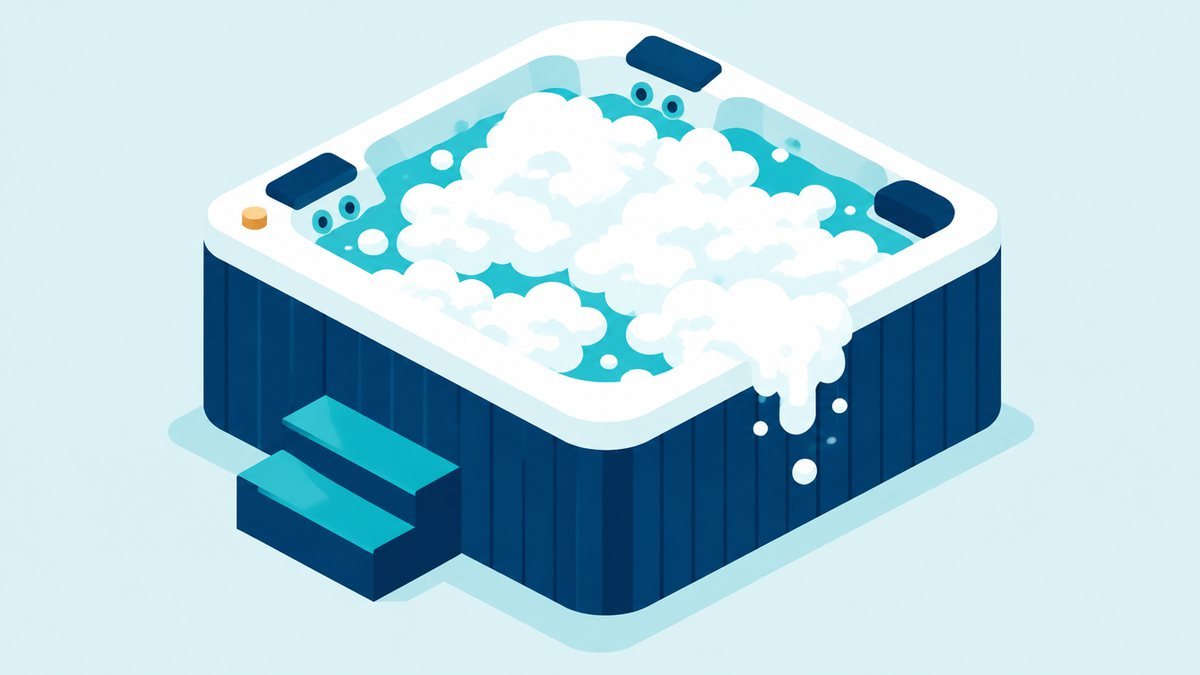
Foam in hot tub water looks harmless, but it is a sign that something has changed: soap or lotion residue, a dirty filter, low-quality balance or simply old water. A thin layer of bubbles after the jets run is normal, but a thick, lasting blanket of foam means the water has too many surface-active compounds in it and needs attention. Foam can also hide poor sanitizer levels, so treating it only with an anti-foam product is rarely the whole answer. This guide explains the common causes of foam in hot tub water, how to stop it and how to keep it from coming back.
What causes foam in a hot tub
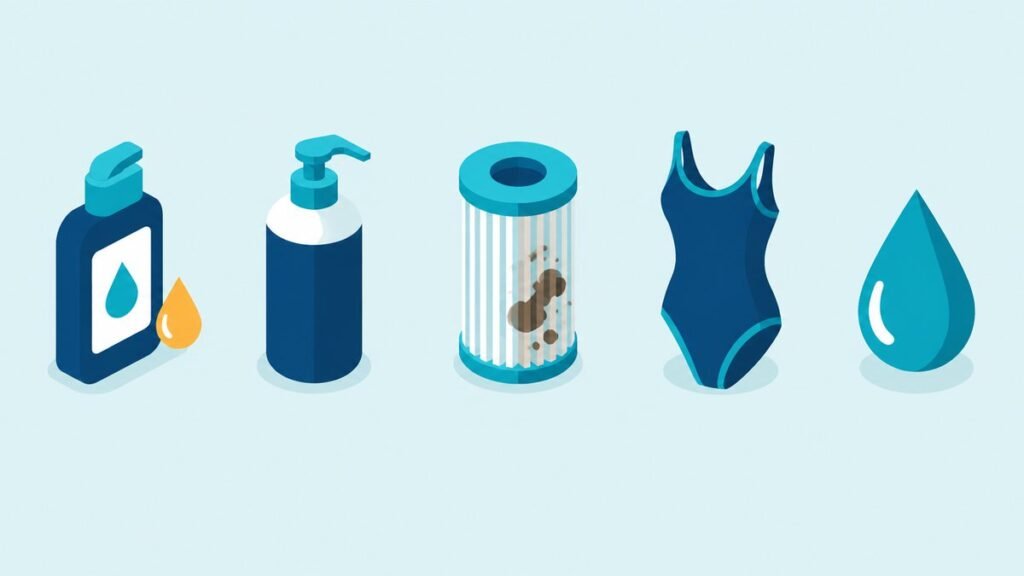
Foam forms when air from the jets mixes with water that contains substances that lower the surface tension, such as soaps, detergents, body oils, lotions, hair products and the leftovers of cleaners. Several things can put them there.
| Cause | How it gets into the water | What helps |
|---|---|---|
| Soap and detergent residue | Swimsuits washed with detergent, or shower products carried in | Rinse off before getting in, and rinse swimwear in plain water |
| Body oils, lotions, cosmetics and sunscreen | Washed off by the water | Shower first, and clean the filter regularly |
| Filter cleaner residue | A cartridge that was not rinsed thoroughly after soaking | Rinse the filter well before reinstalling it |
| Old water with a high load of dissolved solids | Months of use without a drain | Drain, clean the shell and refill |
| Unbalanced water or low sanitizer | Organic matter builds up | Test and rebalance, then shock if needed |
| Shell cleaner or polish residue | Left on the shell after cleaning | Rinse thoroughly after you clean the tub |
Jacuzzi’s filter guide specifically warns that chemical residue left in a cleaned filter can cause foaming in your spa water, so a good rinse matters. Its repair guide lists foamy water among the signs of a clarity problem, together with murky or dirty water.
How to get rid of foam in hot tub water
- Test the water first. Check sanitizer, pH and alkalinity. The CDC says a properly chlorinated hot tub has little odor, and that a strong chemical smell indicates a problem. Foam with a stale smell often means the sanitizer is low.
- Remove what you can. Skim the foam off with a clean cup or net, and wipe the shell at the waterline.
- Take out and clean the filter. Rinse it with a garden hose and, if needed, soak it in a filter cleaner, then rinse it again until no residue is left. See hot tub filter cleaner for the steps.
- Balance and shock. Bring pH and alkalinity into range, and shock the water if the sanitizer is low or the tub has seen heavy use. Our guide to hot tub shock explains how to do it safely.
- Use an anti-foam product if needed. A defoamer is a short-term fix that knocks the bubbles down. Use the amount on the label, and do not rely on it to solve the cause.
- Drain and refill when the water is old. Jacuzzi’s maintenance tips suggest draining about every three months to clean the shell and remove buildup. If foam returns within a day or two of a clean-up, the water is probably past its useful life. See how to drain a hot tub.
How to prevent foam in hot tub water
- Shower before you get in. The CDC lists showering before getting into the water as a basic step, and it removes many of the products that cause foam.
- Rinse swimwear in plain water, without detergent or fabric softener, or keep a dedicated suit for the tub.
- Keep the filter clean. A weekly rinse and a monthly cleaner soak, as Jacuzzi’s filter guide suggests, remove oils before they build up.
- Rinse thoroughly after cleaning. Residue from filter cleaner, shell cleaner or cover protectant is a frequent cause.
- Test often. The CDC recommends checking disinfectant and pH levels regularly, and many owners check before every soak.
- Drain on schedule. Fresh water has less dissolved material to foam.
- Use a tennis ball or two. Jacuzzi mentions tennis balls in the tub as a simple way to absorb body oils.
When foam means something else
Foam that appears right after refilling often comes from the new water or from residue left in the plumbing. Foam that comes with cloudy water, a strong smell or skin irritation points to poor sanitizer levels. In that case follow our steps for cloudy hot tub water, and stay out of the tub until the water tests correctly. If the foam is limited to one area around a jet, check that the air control is not drawing in more air than usual, since too much air can create a lot of bubbles even in clean water.
A quick checklist when foam appears
- Did anyone use soap, lotion or a new product before the soak?
- When was the filter last cleaned, and was it rinsed well afterward?
- When was the water last changed, and how heavily has the tub been used since?
- What do the sanitizer and pH readings say right now?
- Has anything been added to the water in the last day or two?
Answering these five questions usually points to the cause within a few minutes. Write the answers down, because a pattern, such as foam after every party or after each filter cleaning, tells you which habit to change.
Is foam in a hot tub harmful?
Foam itself is not usually dangerous, but it can cover surface contamination, interfere with disinfection and make the water unpleasant to use. The CDC explains that germs can spread through hot tub water and cause respiratory, skin or gastrointestinal illnesses, which is why the water must stay properly disinfected. Treat persistent foam as a signal to test and clean, not as a cosmetic matter.
Frequently asked questions
Why does my hot tub foam after I use it?
Bathers carry in soap, lotions and oils. Shower before you get in, and keep the filter clean so the oils do not build up.
Can I use dish soap to clean the shell?
Avoid it. Household soaps leave residue that causes foam. Use a cleaner made for hot tubs and rinse thoroughly.
Will shock stop foam?
It can help when low sanitizer and organic buildup are the cause, but it will not fix residue from soap or filter cleaner. Test first, then choose the fix.
How often should I change the water to avoid foam?
Jacuzzi’s maintenance tips suggest about every three months, and its repair guide mentions every six months for clarity, so follow your manual and your results.
Sources
These are the sources behind the figures and recommendations above.