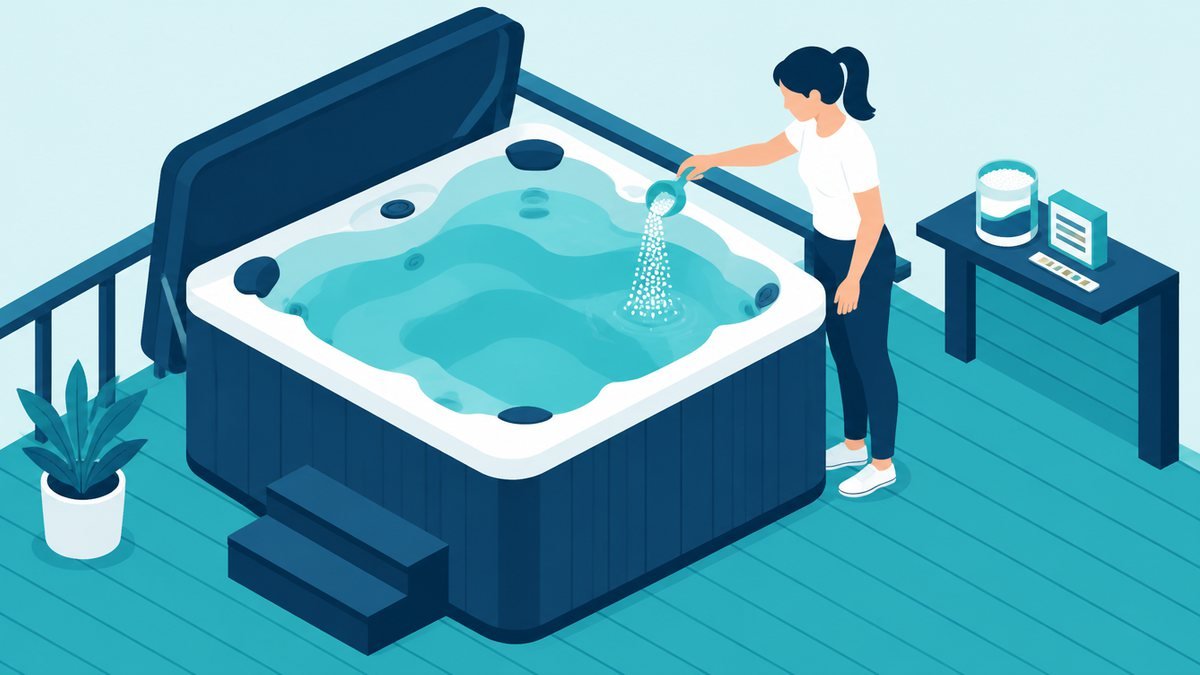
Hot tub shock is a dose of oxidizer that you add to the water to break down the waste that regular sanitizer leaves behind, such as sweat, body oils, lotions and chloramines. When used on schedule, hot tub shock refreshes the water, clears dullness and restores the sanitizer’s strength. Used carelessly, it can irritate skin and eyes, damage a cover or injure the person adding it. This guide explains what shocking does, when to do it, how the main product types differ and how to add shock safely.
What hot tub shock does
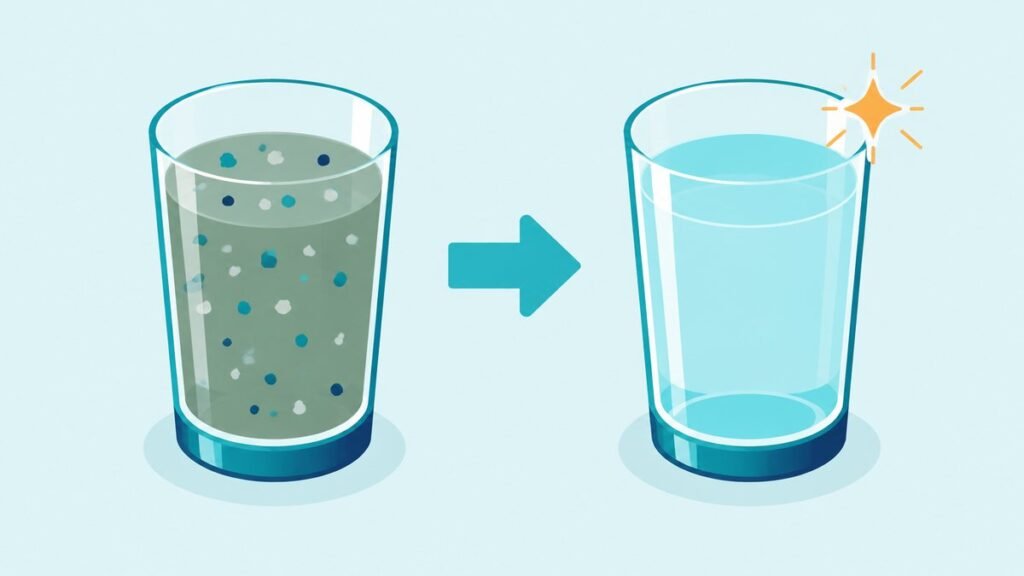
Sanitizer, whether chlorine or bromine, kills germs and then gets used up. As it reacts with waste it forms combined compounds that smell sharp and irritate the eyes. Shocking raises the oxidizer level briefly so those compounds are broken down and the sanitizer can work normally again. It is a cleaning step, not a replacement for steady sanitizer levels.
The CDC explains that chlorine and pH are the first defense against germs in a home hot tub, and that many things reduce chlorine: swimmers’ sweat and dirt, sunlight and the droplets and mist thrown up by hot tub jets. A small tub with a lot of bathers and hot water uses up its sanitizer quickly, so it needs more frequent attention than a large pool.
When to shock a hot tub
- After heavy use, such as a party or a full weekend of soaking.
- When the water looks dull or hazy, or smells strongly of chemicals despite a normal reading.
- After refilling the tub or restarting it after a break.
- After rain gets in, or a flood of debris or a pet gets in.
- On a regular schedule, which many manufacturers set weekly or every other week, so check your manual.
Jacuzzi’s maintenance tips list shock treatments among the essential hot tub chemicals, next to chlorine granules and pH balancers, and say to run the jets for about thirty minutes after adding shock so it spreads evenly. Our guide to hot tub maintenance shows where shocking fits in a full schedule.
Types of hot tub shock
| Type | What it is | Good to know |
|---|---|---|
| Non-chlorine shock (potassium monopersulfate) | An oxidizer that does not add chlorine | Often lets you re-enter sooner, but it does not sanitize on its own |
| Chlorine shock (dichlor or calcium hypochlorite) | A chlorine product in granules | Raises the chlorine level and sanitizes. Dichlor adds cyanuric acid |
| Bromine activator or oxidizer | A product used with bromine systems | Reactivates bromine left in the water |
Read the label for the type and dose. The CDC recommends not using cyanuric acid or chlorine products that contain it, such as dichlor and trichlor, in hot tubs, so check the ingredients before you buy and follow your tub manufacturer’s guidance. See our guide to hot tub chemicals for a plain-language overview of each product.
How to shock a hot tub, step by step
- Test first. Check sanitizer, pH and total alkalinity. Correct pH before you shock, because shock works best when the water is balanced. The CDC recommends a pH of 7.0 to 7.8.
- Remove the cover and leave it open. Fumes need to escape, and a closed cover traps them and can damage the vinyl.
- Turn the jets on. Run the pump at the speed the label directs so the product spreads through the plumbing, and keep the jets running for about thirty minutes, as Jacuzzi advises after adding shock.
- Measure the dose by the label. Use the amount for your tub’s volume. More is not better, and the label is the guide, not rules of thumb.
- Add the product slowly, either straight into the water near a jet or pre-dissolved in a clean plastic bucket if the label calls for it. Never add water to the product.
- Let it circulate with the cover off for the time on the label before you test again.
- Retest and wait. Do not get in until the sanitizer has come back down into the range your manual gives. The CDC recommends at least 3 ppm of chlorine in hot tubs, and your test kit shows when you are in the normal range again.
- Rinse the area. Wipe off any granules from the shell and cover.
Common shocking mistakes
- Shocking while the pH is off. High pH makes chlorine less effective. The CDC notes that as pH goes up, chlorine’s ability to kill germs decreases, especially above 8.0.
- Keeping the cover on. Fumes are trapped and can damage the cover.
- Using the wrong product. Chlorine shock in a bromine tub, or products with cyanuric acid in a hot tub, can cause trouble.
- Soaking too soon. Test and wait until the level is back in range.
- Over-shocking. Excess product can leave the water harsh and shorten the life of parts.
- Skipping the test kit. A shocked tub still needs a reading. The CDC says DPD test kits are the most accurate option for chlorine and that readings above 10 ppm can bleach out in the test and give a false low result, so don’t trust a zero immediately after shocking. See hot tub water tester kit.
If the water is still cloudy afterward
Shock cannot fix a clogged filter or poor balance. Rinse or soak the filter, recheck pH and alkalinity, and if the water stays hazy, read our guide to cloudy hot tub water. If the tub is old, heavily used or has a long history of problems, draining and refilling may do more than another dose.
Frequently asked questions
How often should I shock my hot tub?
Many manufacturers suggest about once a week or after heavy use, but follow the schedule in your manual and your water test results.
Can I use pool shock in a hot tub?
Only if the label allows it and the dose is correct for the volume. Some pool products contain stabilizers or large doses that are not meant for a small tub, so check before you use one.
How long should I wait before getting back in?
Wait for the time on the label and until your test shows sanitizer back in the range your manual gives. Non-chlorine shock usually has a shorter wait than chlorine shock.
Do I need to shock a saltwater hot tub?
Often yes, from time to time. Salt systems still make chlorine that gets used up. See salt water hot tub.
Sources
The references below are good places to confirm the details on this topic.