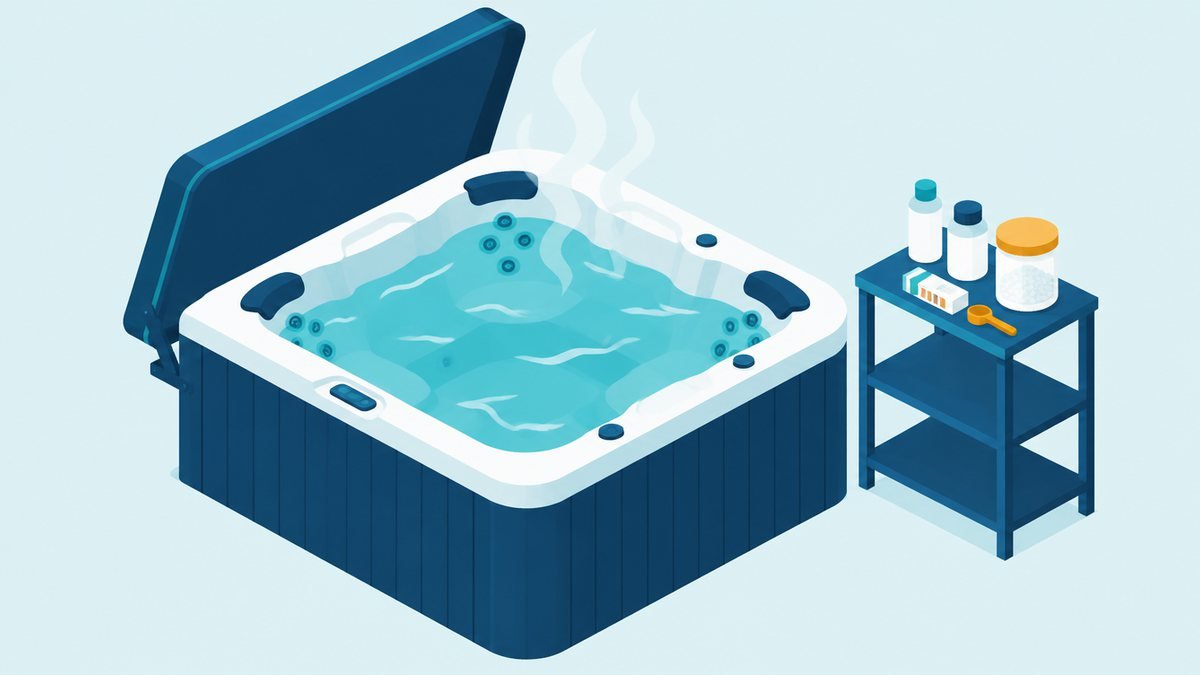
Hot tub chemicals fall into three jobs: a sanitizer to kill germs, products that keep the water balanced (pH and alkalinity) and an occasional shock or oxidizer to clear what the sanitizer leaves behind. You don’t need a shelf full of products. A sanitizer, a pH and alkalinity adjuster, a shock and a good test kit cover almost every tub. This guide explains what each does, which numbers matter, how to add chemicals safely and what you can skip.
The three jobs hot tub chemicals do
Hot tubs hold a small volume of hot water and a lot of people, so germs and oils build up quickly. The CDC says chlorine and pH are the first defense against germs that can make swimmers sick, and that owners should check both regularly. Everything else supports that.
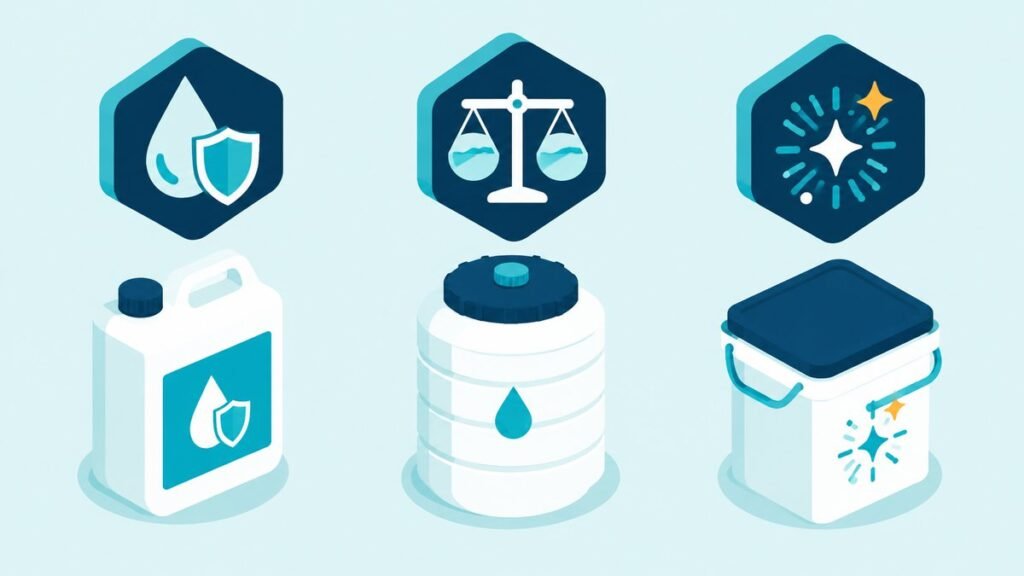
| Job | Typical products | What it does |
|---|---|---|
| Sanitize | Chlorine or bromine (granules, tablets or liquid) | Kills bacteria and other germs |
| Balance | pH increaser or decreaser, alkalinity increaser, calcium hardness adjuster | Keeps the water comfortable, protects equipment and lets the sanitizer work |
| Shock and clean | Non-chlorine oxidizer or chlorine shock, filter cleaner, scale or stain control | Clears built-up contaminants and keeps surfaces and filters clean |
The numbers that matter
Different sources give slightly different targets, so check your owner’s manual too:
| Measure | CDC | Jacuzzi’s maintenance tips |
|---|---|---|
| pH | 7.0 to 7.8 | 7.4 to 7.6 |
| Chlorine in a hot tub | At least 3 ppm | Follow product and manual |
| Total alkalinity | Not specified | 100 to 150 ppm |
| Calcium hardness | Not specified | 175 to 275 ppm |
The CDC also recommends not using cyanuric acid, or chlorine products that contain it, in hot tubs. Products such as dichlor or trichlor contain it, so read the label. If your tub uses bromine instead of chlorine, follow the bromine product’s instructions and see our guide to bromine vs chlorine in a hot tub.
Choosing a sanitizer
Chlorine and bromine are the two common choices. Chlorine is widely available and acts quickly, and bromine is the usual alternative, often used with a floating dispenser or cartridge. Some tubs add a mineral cartridge, ozone or an automated system, and your manual says whether they replace a sanitizer or work alongside one. Use only products labeled for hot tubs, and use one type consistently. Don’t switch between chlorine and bromine without draining and following the manufacturer’s advice.
pH and alkalinity products
You need a way to raise and lower pH, and a way to raise alkalinity. Sodium bicarbonate (baking soda) raises alkalinity, and Taylor Technologies says it raises pH slightly. Acid-based decreasers lower pH and alkalinity. Our guides to raising pH and lowering pH explain the principle for pools, and the same logic applies to a hot tub, with much smaller doses because the volume is small.
Shock and oxidizers
A shock treatment oxidizes the organic waste that builds up from bathers. Many hot tub owners use a non-chlorine shock so they can use the tub sooner. Use it after heavy use, after a party or when the water smells or looks dull. Our guide on how to shock a hot tub goes through it. Always follow the product label for dose and waiting time.
Test kits and strips
Test before you add anything. The CDC recommends a DPD kit for the most accurate chlorine and pH results, and it advises testing at least twice a day in a hot tub or pool that is in heavy use. Strips are quick for routine checks, and a drop kit is better for precision. Replace strips and reagents when they expire. See hot tub water test kits for comparisons.
What you can skip
- Chemicals that overlap, such as several clarifiers and enzymes at once.
- Household products that aren’t made for hot tubs. They can foam, stain or damage seals.
- Stabilized chlorine products that contain cyanuric acid, according to the CDC’s advice.
- Daily “just in case” doses. Test first, then add only what the test shows you need.
Buying and storing chemicals
Buy small containers and use them within the shelf life on the label. Store them in a cool, dry, ventilated, locked place, out of sunlight and away from other chemicals, with acids and chlorine kept apart. Close lids tightly, and never reuse a container. Dispose of old product as the label and your local rules direct.
When water chemistry goes wrong
Cloudy, foamy or smelly water usually points to sanitizer, filter or balance problems. Start by testing, cleaning the filter and checking the numbers before adding more chemicals. See cloudy hot tub water if the water looks hazy.
A simple routine for a new fill
When you fill a tub, run the pump, then test before adding anything. Fill water can start at almost any pH and alkalinity, so adjust alkalinity first, then pH, and let the water circulate between steps. Add your sanitizer once the balance is right, and wait for it to settle in range before you soak. Keep a record of what you added, because it tells you what the tub needs next time.
Common mistakes with hot tub chemicals
- Adding a chemical and getting in straight away. The CDC reports that injuries were most often linked to chemicals added just before someone entered the water.
- Mixing a sanitizer and an acid in the same bucket or measuring cup.
- Dosing for a pool when the tub is a fraction of the volume.
- Letting sanitizer drop to zero between tests, then trying to catch up with a heavy dose.
- Ignoring the filter. A dirty filter makes every chemical work harder.
- Using expired chemicals or test strips.
Eco and sensitive-skin options
Some owners prefer non-chlorine shock, a mineral cartridge or an ozone system to reduce chemical use or smells. They can help, but they don’t remove the need to sanitize. The CDC says chlorine and pH are the first defense against germs, so use whichever system your tub’s maker supports, keep the sanitizer in range and test regularly. If your skin or eyes react, check pH and sanitizer first, because water that is out of balance is the usual cause, not the product itself.
If you are considering a salt system, read our guide to the salt water hot tub.
Frequently asked questions
What chemicals do I need for a hot tub?
A sanitizer, pH and alkalinity adjusters, a shock or oxidizer and a test kit. Add filter cleaner and other products only if you need them.
Can I use pool chemicals in a hot tub?
Only if the label says it is suitable for hot tubs. Hot tub doses are small, and the CDC advises avoiding products containing cyanuric acid in hot tubs.
How often should I test hot tub water?
The CDC says at least twice a day when the tub is in heavy use. Jacuzzi suggests weekly testing for a tub in normal use. Test before each soak if you’re unsure.
Can I add all the chemicals at once?
No. Add one at a time, with the pump running, wait for them to circulate and retest, and never mix products.
Sources
These sources are the basis for the guidance in this article.