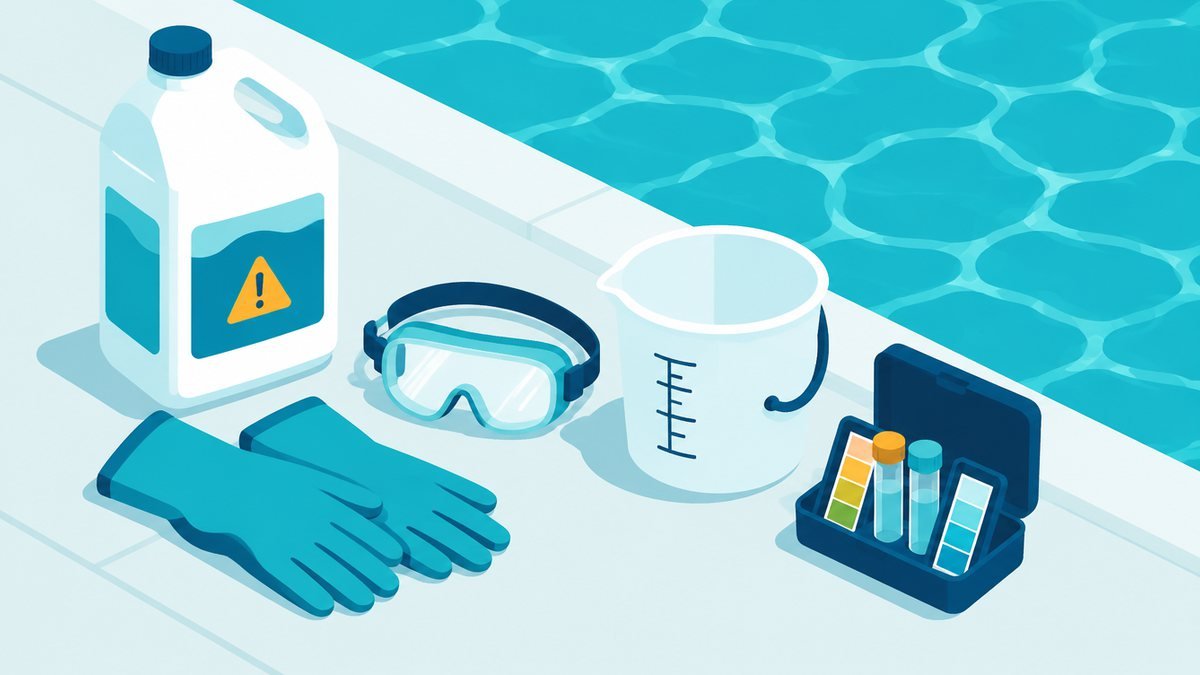
How to lower pH in pool water comes down to this: test the water, check total alkalinity, then add a pH decreaser, usually muriatic acid or dry acid (sodium bisulfate), in small amounts as the product label directs. Add it to the water with the pump running, wait for it to circulate and retest. Acid lowers both pH and alkalinity, so fix the cause of high pH rather than just treating the number. High pH makes chlorine less effective, can cloud the water and can cause scale, so it is worth correcting early and carefully.
Why high pH is a problem
The CDC recommends keeping pH between 7.0 and 7.8. It explains that as pH goes up, the ability of chlorine to kill germs goes down, especially above 8.0. High pH also encourages scale on surfaces and equipment and can make the water look dull or hazy. If cloudiness is your problem, see our guide to cloudy pool water as well.
What to do depending on your reading
| pH reading | What it means | What to do |
|---|---|---|
| Below 7.0 | Too low, and pipes are more likely to corrode, according to the CDC | Raise it. See how to raise pH in pool water |
| 7.0 to 7.8 | Inside the CDC’s recommended range | Leave it alone |
| Above 7.8 | High, and chlorine is less effective | Lower it in small steps |
| Above 8.0 | Chlorine’s germ-killing power is noticeably reduced | Lower it, then retest |
Check alkalinity before you add acid
Acid lowers alkalinity as well as pH, according to Taylor Technologies. Taylor gives 80 to 120 ppm as the ideal total alkalinity range. If alkalinity is already low, a lot of acid can push it too low, and pH will bounce back. If alkalinity is high, that is often why pH keeps rising, and our guide to how to lower alkalinity in a pool explains the fix. Test both and adjust alkalinity first when it is out of range.
How to lower pH in pool water, step by step
1. Test accurately
Use a reliable kit. The CDC recommends a DPD kit for the most accurate pH and chlorine readings. Take a sample from elbow depth, away from returns. Our guide to pool water test kits compares the options.
2. Choose the right product
Muriatic acid (hydrochloric acid) is a liquid, and dry acid (sodium bisulfate) is a granular product that is often easier to handle. Both are hazardous. Buy a pool product, keep it in its original container and read the label before every use.
3. Work out a cautious first dose
The label gives doses for a volume of water. Use less than the full calculated amount to start, because you can always add more but can’t remove it. Don’t guess at the pool volume. If you aren’t sure, see how many gallons is my pool.
4. Add the acid with the pump running
Wear gloves, goggles and suitable clothing, and work in open air. Add the product to the water, never water to the product, and pour it slowly near a return jet or as the label says, keeping your face away from fumes. Open one container at a time, as the CDC advises.
5. Wait, then retest
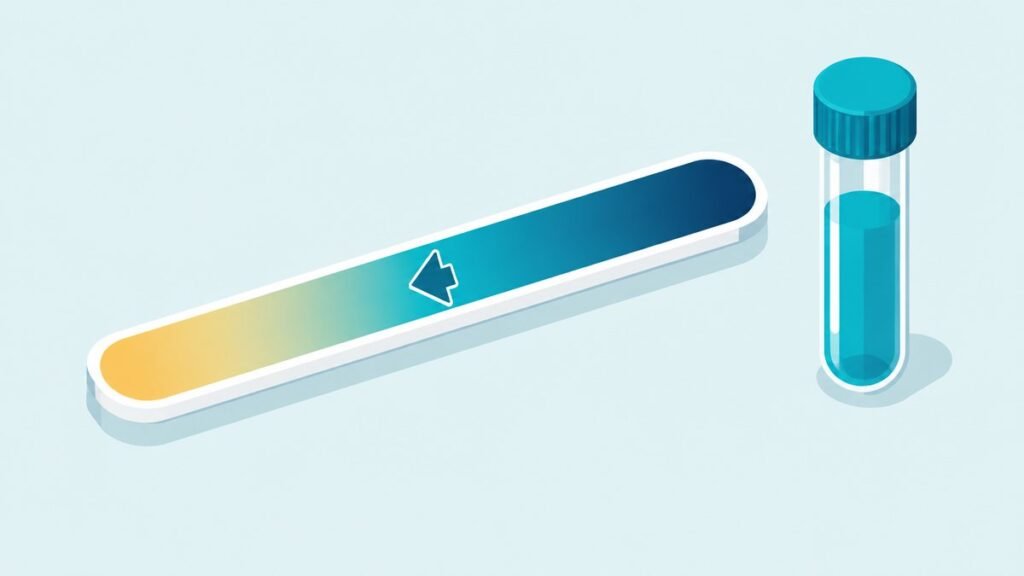
Let the pump run for several hours, then test pH and alkalinity again. Repeat in small steps. Don’t swim until the product has dispersed and the label’s waiting time has passed.
Why pH keeps rising
- High alkalinity. The water is overbuffered and drifts upward.
- Aeration. Waterfalls, fountains and spillovers release carbon dioxide and lift pH over time.
- Some sanitizers. Certain chlorine products raise pH, and others lower it.
- New plaster or concrete. Fresh surfaces can raise pH for a while.
- Fresh fill water. Source water can start high.
If you keep chasing pH, review the cause and not just the number.
What not to do
- Don’t add acid and chlorine at the same time or pour one chemical into another.
- Don’t add a full dose without testing.
- Don’t use household products for pool chemistry.
- Don’t add chemicals directly over a drain, a skimmer or a skin-contact area.
- Don’t let pool acid splash on metal, concrete or plants.
What the acid actually does
Pool acid works by neutralizing the alkalinity in the water, which brings pH down. Taylor Technologies’ chemistry reference lists muriatic acid and dry acid as lowering both pH and total alkalinity, which is why the same product can fix a pH problem and create an alkalinity problem. That is also why you add it in small amounts and retest, rather than aiming for a single big correction. When both numbers are high, acid treats both at once. When only pH is high, you may need a gentler approach.
Muriatic acid or dry acid?
| Product | Form | Handling points |
|---|---|---|
| Muriatic acid | Liquid (hydrochloric acid) | Fumes are strong and the liquid is very corrosive, so work outdoors with eye and skin protection |
| Dry acid (sodium bisulfate) | Granules | Easier to measure and store, but still corrosive and it can irritate if it becomes airborne |
Both are hazardous, and neither should be stored near chlorine. The CDC says to keep incompatible chemicals, such as acid and chlorine, separated, in their original labeled containers, dry, cool and out of direct sunlight.
Measuring and dosing
The label gives a dose for each volume of water, but the dose is only a starting point because your water’s alkalinity, temperature and sanitizer all change the result. Use a dedicated measuring cup that you never use for anything else, and rinse it after each use. Record the date, the amount you added and the readings before and after. A simple log shows how much your pool needs over time.
After you add acid
Run the pump for several hours and brush the surfaces so the water mixes. Test again before you add more. Keep people out of the water until the product has dispersed, as the label says, because the CDC reports that patients were most frequently injured when chemicals were added just before they entered the water. Store the container tightly closed in a ventilated, locked place.
Frequently asked questions
What lowers pH in a pool?
Muriatic acid or dry acid (sodium bisulfate), added in small amounts. Both also lower alkalinity.
How long after adding acid can I swim?
Follow the product label and swim only once it has dispersed and the water tests in range.
Should I lower pH or alkalinity first?
Check both. If alkalinity is high, lowering it often brings pH down with it, and acid lowers both.
Why does my pool pH keep going up?
High alkalinity, aeration from water features and some sanitizers are common causes. Fix the cause as well as the reading.
Sources
The references below are good places to confirm the details on this topic.