
Hot tub covers do two jobs: they keep heat in and they keep people and debris out. The cover is the most important part of a tub’s insulation, so a worn or waterlogged one can raise your energy use and make the heater work harder. This guide explains what hot tub covers are made of, how to choose and fit one, why a cover lifter helps, and when it is time to replace the cover.
What a hot tub cover does
A good cover traps heat, slows evaporation, keeps leaves and dirt out and, if it is locked, stops children and pets getting to the water. Jacuzzi says a quality cover helps protect the heater, because without a barrier to keep heat in, the heater has to work harder. The Consumer Product Safety Commission’s Pool Safely campaign lists pool covers among the safety devices that help prevent drownings, and a lockable cover is the version to look for on a tub.
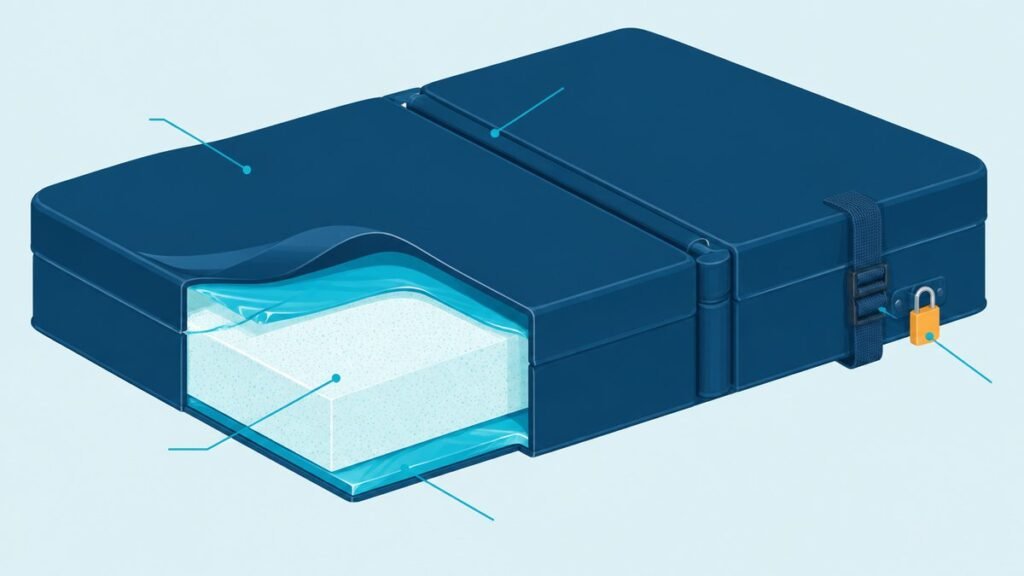
What is inside hot tub covers
Most covers share the same layers:
| Layer | What it is | Why it matters |
|---|---|---|
| Vinyl skin | Marine-grade vinyl on the outside | Resists sun, rain and cracking |
| Foam core | Expanded polystyrene (EPS) foam, often in panels | Provides the insulation and the strength |
| Vapor barrier | Plastic wrap around the foam | Stops moisture reaching the foam, which would make it heavy |
| Hinge fold | A seam where the cover folds in half | Lets you fold it back |
| Straps and locks | Tie-downs on the side of the tub | Keep the cover on in wind and keep it secure |
Jacuzzi describes tapered covers, for example a design that is 5 inches thick at the center and 3 inches at the edges, which shed rain and light snow rather than letting water pool. Foam thickness and density vary by manufacturer, and the figures vary, so compare written specifications and not marketing words.
How to choose a hot tub cover
- Size and shape. Measure the tub’s outside dimensions, including rounded corners, and give the corner radius. A poor fit lets heat escape, even with thick foam.
- Thickness and taper. A tapered cover sheds water. A thicker core insulates better.
- Foam density. Denser foam is stronger and lasts longer. Compare specifications from the maker.
- Vapor barrier and seams. A well-sealed barrier protects the foam from moisture.
- Locks and straps. Check the locks are sturdy, and that the straps fit your cabinet.
- Safety standard. Jacuzzi says its covers meet the ASTM F1346 safety standard for pool and spa covers. Look for a cover that states which safety standard it meets.
Cover lifters: do you need one?
A full-size cover is heavy and awkward, especially in wind. A cover lifter holds the cover at the side or lifts it clear of the tub. It makes removal easier, protects the cover from damage and avoids strain, which is why Jacuzzi calls lifters an essential accessory for many owners. Check that the lifter suits your cover’s weight and the tub’s size, and that it doesn’t block access in an emergency.
How to look after a hot tub cover
- Clean it a few times a year with a mild cleaner, and rinse it. Jacuzzi suggests a diluted bleach solution for mildew on the cover surface, but keep it away from the tub water and check the cover maker’s instructions.
- Clear heavy snow and standing water, because the weight stresses the foam.
- Keep the cover latched when the tub isn’t in use, and keep chemical vapors from building up by letting the water breathe briefly after treatment.
- Don’t let children or pets stand on a cover.
- Store a removed cover flat and dry, not folded in the sun.
Signs it is time to replace the cover
- It feels heavy or spongy, which usually means the foam has absorbed water.
- The vinyl is cracked, torn or peeling.
- The seams, hinge or straps have failed.
- It sags in the middle and holds water.
- Your heater runs more than it used to and the water cools fast.
Cover and winter care
In winter, a good cover keeps heat in and snow out. If you shut the tub down for the season, see our guide on how to winterize a hot tub. For routine care that includes the cover, see hot tub maintenance. If the heater seems to be working harder than it should, check the cover as well as the equipment, and see hot tub repair.
Measuring for a replacement cover
Measure at the widest points, length and width, across the top rim of the tub, and note the radius of the corners, the cabinet height and the rim shape. Give the manufacturer or dealer the model name if you know it. Mention anything that affects the fit, such as a raised rim, a cover lifter mount or a tub that sits against a wall. A cover made a little off size can leave gaps that let heat escape and water in.
Energy and comfort
A tight, thick, dry cover is one of the cheapest ways to cut a tub’s heating load, because most of the heat is lost from the surface. Jacuzzi says a poorly fitted or worn cover makes the heater work harder, which can shorten its life. Manufacturers also publish insulation values and savings estimates, but those figures vary a lot and are rarely independently tested, so treat them as a guide and compare the construction details instead.
Hard covers, soft covers and thermal blankets
- Hard (insulated) covers are the standard. They are heavy, durable and lockable.
- Floating thermal blankets sit on the water under the main cover and cut evaporation, but they are not a substitute for a safety cover.
- Soft or inflatable tub covers may suit those tubs, but check how they are secured.
- Winter covers or tarps go over the main cover in severe weather, as Jacuzzi suggests for winterizing.
Mildew, odors and chemical damage
A cover that smells musty usually has moisture trapped under it. Let the tub air out for a few minutes after chemical treatment, and wipe the underside regularly. Strong chemical vapors and high sanitizer levels can break down the vinyl and the underside faster, so keep the water in range as the CDC advises, and avoid shocking the tub with the cover closed. Use a vinyl conditioner made for spa covers on the outside to slow sun damage.
Frequently asked questions
How long does a hot tub cover last?
It depends on the quality, sun, snow and care. Replace it when it is waterlogged, cracked or no longer fits.
Do I need a cover lifter?
It isn’t required, but it makes removal easier and protects the cover. It is especially useful for large covers and windy sites.
Why is my hot tub cover heavy?
Water has probably got into the foam through a torn vapor barrier or seam, and it needs replacing.
Can I leave the cover on all the time?
Yes when the tub isn’t in use, and it should be locked. Remove or lift it when you use the tub, and let the water breathe after chemical treatment.
Sources
The references below are good places to confirm the details on this topic.