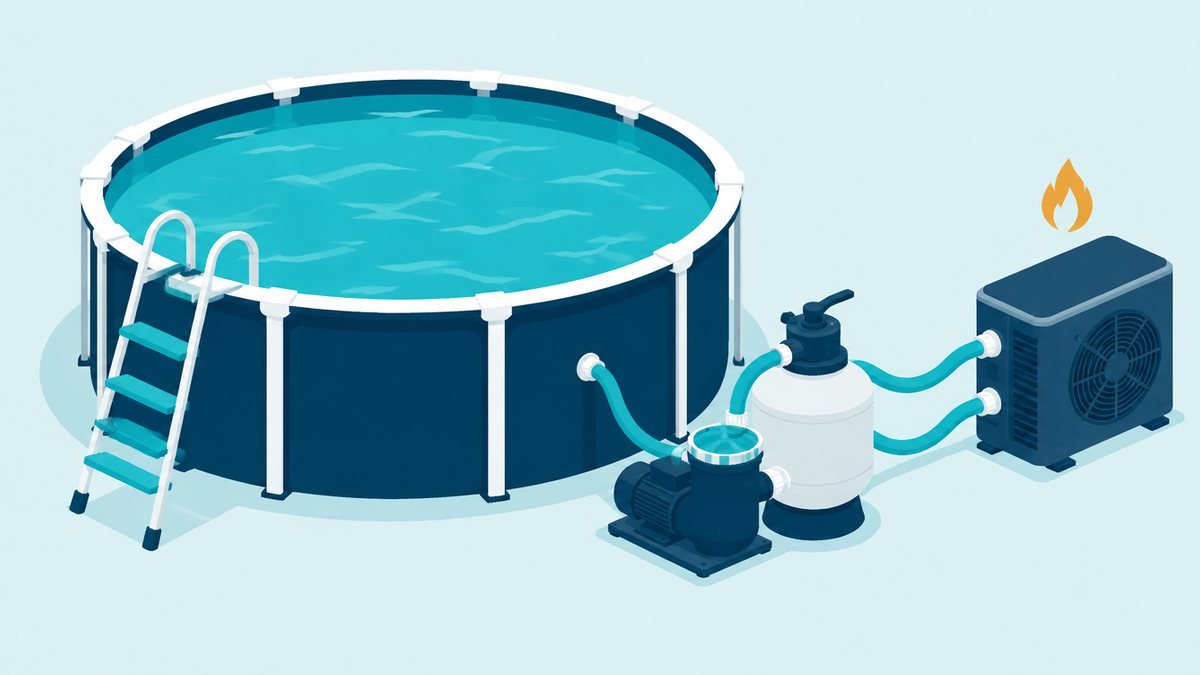
An above ground pool heater is usually one of four types: a gas heater, an electric resistance heater, a heat pump or a solar mat. The right one depends on your pool size, how warm you want the water, how long your season is and what fuel and power you have. Because above ground pools hold less water and lose heat quickly, a heater plus a cover often does more than a bigger heater alone. This guide explains each type, how to size one and what to check before you buy.
The main types of above ground pool heater
| Type | How it heats | Strengths | Things to consider |
|---|---|---|---|
| Gas (natural gas or propane) | Burns fuel to heat water as it passes through | Heats quickly and works in cool weather | Needs a gas supply and venting, and installation rules apply |
| Electric resistance | Heating elements warm the water | Compact and simple, with no combustion | Draws a lot of electricity, so check your circuit |
| Heat pump | Moves heat from the air into the water | Efficient when the air is warm enough | Slows in cold weather and costs more up front |
| Solar mat or panel | Water circulates through panels heated by the sun | Low running cost | Depends on sun and roof or ground space, and heats slowly |
The U.S. Department of Energy regulates these heaters as consumer pool heaters (gas-fired, electric resistance and electric heat pump), and its 2023 final rule set efficiency standards for gas-fired heaters and, for the first time, for electric pool heaters. Efficiency, price and running cost still differ a lot between models and regions, so compare written specifications and local energy prices.
Why a cover matters as much as the heater
A large share of a pool’s heat is lost from the surface. In its pool heater rulemaking, DOE assumes that a pool cover can save up to 50 to 70 percent of overall energy use. For an above ground pool, a solar cover or other pool cover is often the cheapest way to keep heat in. Use it whenever the pool is not in use.
How to size an above ground pool heater
1. Know your pool’s volume
Work out how many gallons the pool holds from its shape and depth, or use the manufacturer’s figure. Our guide to how many gallons is my pool explains the method.
2. Decide how much warmer you want it
The bigger the difference between the water and the air at its coldest, the more heater you need. Think about your coolest evenings, not just the warmest days.
3. Check the heater’s flow requirements
Every heater has a minimum and maximum water flow, and a small above ground pump may not meet it. Hayward’s guidance for its heaters warns not to run a heater below its minimum flow. Check the heater manual against your pump’s real flow. Our guide to above ground pool pumps covers pump sizing.

4. Check your power or gas supply
An electric heater may need a dedicated circuit and a certain wire size, and a gas heater needs a gas line and ventilation. These jobs belong to licensed professionals.
Installing and using the heater
- Install it on a level, firm base, in the open air, with the clearances in its manual.
- Place it after the filter in the plumbing, as the heater manual shows, so the water is clean.
- Keep the intake and pump area free of debris.
- Use a bypass or valves if the manual calls for them, and set them so water flows through the heater.
- Use a timer so the heater and the pump run together, and avoid running a heater without circulation.
If the heater won’t heat
Flow, filter and settings cause most problems. See our guide to pool heater repair. For efficient options, read about pool heat pumps and solar pool heating.
Questions to ask before you buy
- Is it designed for above ground pools and the water volume I have?
- What flow does it need, and does my pump meet it?
- What supply does it require: gas, a particular circuit or sun?
- What will it cost to run where I live?
- What warranty and local service does it come with?
- Is there a utility rebate for a heat pump or solar system?
Gas, electric, heat pump or solar: how to decide
Start with the season you want. If you want warm water in cool shoulder months, a gas heater gives the most heat on demand. If you only want to take the chill off in summer, solar or a heat pump may be enough. Consider the supply you already have: a gas line, spare electrical capacity, or a sunny spot with space for panels. Then think about the cost to run it in your area, which depends on local fuel and electricity prices and on how long you run it. Solar heating has little or no fuel cost, but it works slowly and depends on the weather.
Keep the heat in: simple low-cost steps
- Use a pool cover or solar cover whenever the pool is not in use.
- Shelter the pool from wind with a fence, hedge or wall where possible.
- Run the pump and heater only as long as you need, using a timer.
- Keep the thermostat as low as is comfortable. Every degree costs energy.
- Check for leaks in the plumbing and the liner, because losing water means losing heat.
Maintaining a pool heater
Keep the filter clean so flow stays good, keep the water chemistry in range, and keep the area around the heater clear of leaves, boxes and stored items. Have a gas heater inspected by a technician on the schedule in its manual, and drain any heater before freezing weather as its maker directs. Our guide on closing a pool for winter covers the shutdown.
Heating time and what to expect
A new heater won’t warm the pool in minutes. Smaller above ground pools heat faster than large ones, but they also cool faster overnight, which is why a cover matters. Heat the pool before you want to use it, and don’t expect the water to stay warm if the weather turns. A heat pump may take longer than a gas heater, and a solar mat even longer. Plan around your schedule, and be patient while the water comes up to temperature.
Frequently asked questions
What is the best heater for an above ground pool?
It depends on your climate, pool size and power or gas supply. Gas heats fastest, heat pumps are efficient in mild weather and solar is cheap to run but slow.
Do I need a cover if I have a heater?
Yes. A cover cuts heat loss from evaporation, so the heater works less.
Can I use any pump with a pool heater?
No. The heater needs a minimum flow, so check its manual against your pump.
Can I install a heater myself?
Plumbing connections are often doable, but gas lines, venting and electrical work should be done by a licensed professional.
Sources
Instructions can vary by brand and year, so keep your manual close while you work. The references below support the details in this guide.