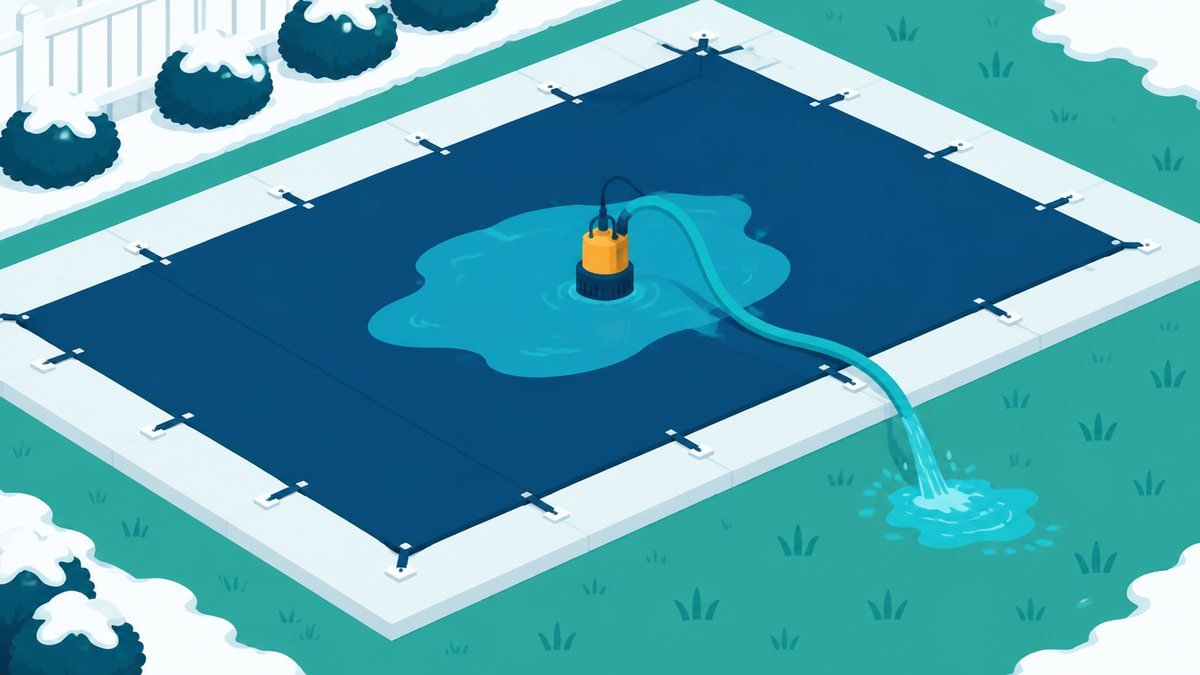
A pool cover pump is a small submersible pump that sits on top of a pool cover and removes rain and melted snow, so the cover doesn’t sag, tear or spill water and debris into the pool. Used properly, it protects the cover and the pool over winter. Used carelessly, it is an electrical hazard, because it combines mains power with water. This guide explains how a pool cover pump works, how to choose and place one, how to run it safely and what to do when it fails.
What a pool cover pump does
Water that collects on a winter cover adds weight and stretches the material. It can pull the cover into the pool, carry leaves and dirt into the water and, if it freezes, damage the cover. A cover pump sends the water over the pool edge through a hose. Pentair’s Simer manual describes its pump as designed for water removal from pool covers in home swimming pool applications, and notes it is not designed for salt water or brine. A cover heavy with water is also a hazard in itself, because it can fail suddenly.
How a cover pump works
- Inlet screen. A strainer at the bottom stops debris.
- Motor and impeller. The sealed motor drives an impeller that pushes the water out.
- Float switch or sensor. Many pumps start when the water reaches a set depth and stop when it drops, so they run automatically.
- Discharge hose. A flat or garden hose carries the water over the edge to the lawn or a drain.
- Power cord with GFCI. Many include a ground-fault circuit interrupter built into the plug.
Types of pool cover pump
| Type | How it starts and stops | Good for | Things to consider |
|---|---|---|---|
| Manual | You plug it in and unplug it | Short jobs and occasional use | It needs attention and can run dry |
| Automatic with a float or sensor | Switches on at a set water depth and off as it drops | Winter covers and unattended use | Depth thresholds vary by model, and floats can stick if debris gets in |
| Combination | Automatic with a manual override | Most owners | Check which mode it is in before you leave |
How to use a pool cover pump
1. Choose the spot
Place the pump in the lowest point of the cover, where water collects. Keep it clear of leaves and debris. Don’t let it sit on ice, and don’t let it get under a cover edge.
2. Position the hose
Lay the discharge hose so water drains away from the pool, and keep it from kinking. Make sure it can’t drain back onto the cover.
3. Plug it in safely
Plug into a properly grounded, GFCI-protected outlet. Pentair’s cover pump manual says the pump has a GFCI built into the plug, that you must not modify the cord, plug or GFCI and that you must not use an extension cord. Keep the connection dry and off the ground, and keep the cord out of the water.

4. Test it
Check that the pump starts and moves water, and that the GFCI trips when you press its test button. Look at it again after a storm.
5. Check it regularly
Clear the inlet screen, make sure the float moves freely and watch the water level on the cover. In freezing weather, check it doesn’t freeze in place.
Common cover pump problems
- It doesn’t start: check the outlet, the GFCI and whether the float is stuck or the water is too shallow.
- It runs but moves little water: clear the inlet screen and check the hose for kinks. If it runs but moves no water, it may be airlocked, and Pentair’s manual warns that an airlock makes the pump overheat and fail.
- It cycles on and off: water may be draining back, or the float may be sticking.
- It stops in freezing weather: the pump or hose may be frozen, so thaw them and clear the ice.
When to remove the pump
Take it out when the cover is dry and the weather is warm, and before you open the pool. Rinse and dry it, check the cord and screen and store it indoors. See how to close a pool for winter and how to open a pool for the rest of the seasonal routine.
Choosing a cover pump
- Flow rate and lift. Compare the gallons per hour at the height you need to lift the water, which falls as the lift increases. Pentair’s manual publishes a table of gallons per hour at several heights.
- Automatic operation. For unattended use, choose a pump with a float or sensor, and check the depths at which it starts and stops, because they differ between models.
- Built-in GFCI. This adds protection, but you should still use a GFCI outlet if the instructions say so.
- Hose connection. Check it takes a garden hose or a flat discharge hose, and what adapter it needs.
- Cord length. Choose one long enough that you don’t need an extension cord, since manufacturers warn against them.
Cover pumps and different covers
A solid winter cover holds water and needs a pump. A mesh safety cover lets water through, so a pump is usually not needed. A solar cover floats on the water and doesn’t collect rain. Check what your cover maker advises, because some covers say how much water is acceptable on top and how to remove it. If you use a pool alarm or other safety device, keep it working all winter.
Water on the cover: what is too much?
A little standing water after rain is normal. A deep pool on top of the cover is not. It adds weight, stretches the fabric and can overflow the edges. If water is more than you can safely pump in a day, check that the pump is running, that the hose is clear and that the water isn’t draining back. If ice has formed, don’t chip it with sharp tools or walk on the cover, and wait for a thaw or follow the cover maker’s advice.
Cleaning the water off the cover before you open the pool
In spring, pump off as much water as you can before you remove the cover, then lift the cover carefully so dirt on it doesn’t fall into the pool. Brush off leaves first, and let the cover drain and dry on a clean surface before storing it. Our guide to how to open a pool covers the next steps.
Frequently asked questions
Do I need a pool cover pump?
If you use a solid winter cover, yes, because rain and snowmelt will collect on it. Mesh covers let water through and may not need one.
Can I leave a cover pump running all winter?
An automatic pump can stay in place, but check it regularly, especially after storms and in freezing weather.
Can I use an extension cord with a cover pump?
Pentair’s manual says not to. Provide a properly located GFCI outlet instead.
How do I stop a cover pump from freezing?
Remove it before a hard freeze if you can, or check and clear it after cold snaps. Follow the maker’s instructions.
Sources
Check the owner’s or installation manual for your specific unit, since brands and models vary. These pages back up the details above.