Swimming pool leak detection starts with a simple question: is the pool losing water to a leak, or only to evaporation? Pools lose some water every day to sun, wind and splashing, so a lower level is not proof of a leak. A few simple tests, done in the right order, can tell you whether you have a problem, whether it is in the pool shell or in the equipment and plumbing, and when to call a leak detection professional. This guide explains swimming pool leak detection step by step, what the tests show and what not to do.
Leak or evaporation? Start with the bucket test
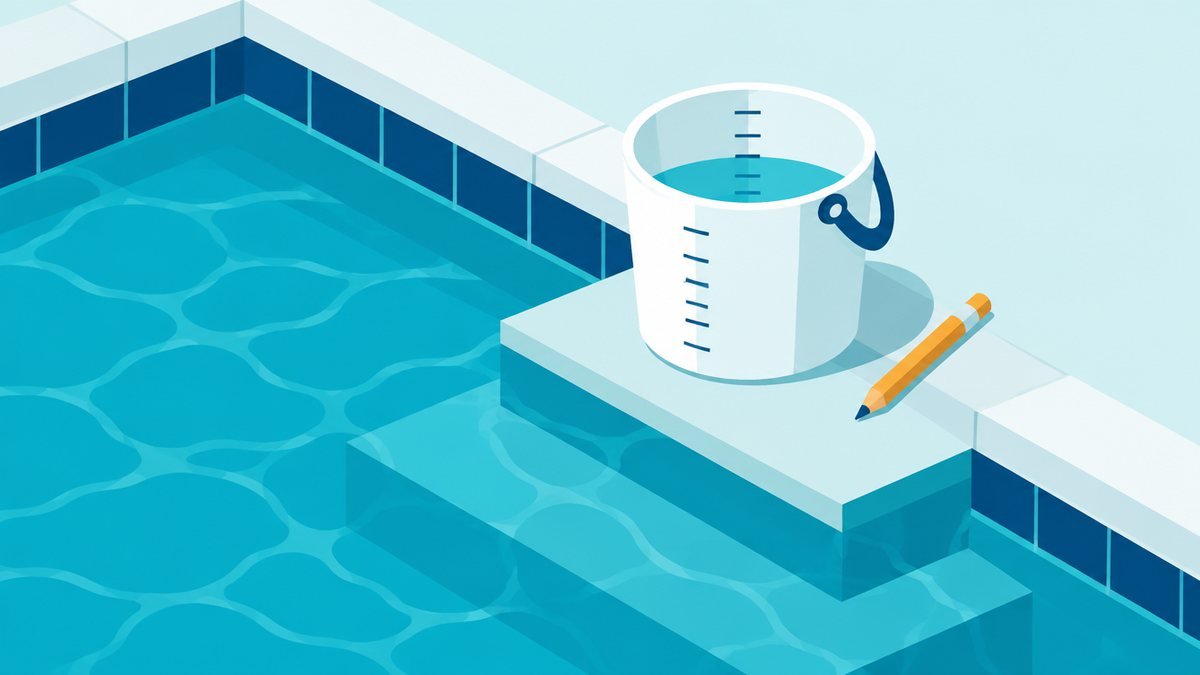
The bucket test compares how fast the pool level drops with how fast water evaporates from a bucket sitting in the pool. American Leak Detection describes it this way:
- Fill the pool to its normal level, and turn off any automatic fill device.
- Fill a 5 gallon bucket with pool water to about an inch from the top.
- Set the bucket on the first or second step so that it sits about 5 inches into the water.
- Mark the water level inside the bucket and the water level outside it, on the bucket.
- Come back after 24 hours and compare the two marks.
If the pool level has dropped further than the water inside the bucket, the pool is probably leaking. If both dropped about the same amount, the loss is probably evaporation. American Leak Detection advises checking at the 24 hour mark, since waiting longer can give inaccurate results, and starting again after a rainy period.
What the results tell you
| Result after 24 hours | Likely meaning | Next step |
|---|---|---|
| Pool and bucket dropped by about the same amount | Evaporation | Use a cover to reduce loss, and keep monitoring |
| Pool dropped more than the bucket | Probable leak | Repeat with the pump off and on to narrow it down |
| Bucket dropped more than the pool | A test error, such as a bucket in full sun or a disturbed mark | Redo the test with the bucket placed as described |
| Rain, high wind or heavy swimming during the test | Unreliable | Start again when conditions are calm |
Swimming pool leak detection: narrowing down the source
Once the bucket test points to a leak, the next question is whether the water is escaping from the shell or from the equipment and plumbing. A common approach is to repeat the test twice, once with the pump running for the full 24 hours and once with the pump off, and compare the drop. If the pool loses more water while the pump runs, the leak is probably on the pressure side of the plumbing or in the equipment. If it loses more with the pump off, or about the same either way, the shell, fittings or suction-side lines may be responsible. These are general diagnostic ideas rather than a replacement for a professional pressure test, and the right method depends on your pool type.
Check the usual suspects as well:
- Skimmer and return fittings. Where two materials meet, such as a fitting and a liner or a skimmer and the pool wall, the seal can fail. Look for gaps and cracked faceplates.
- Light niches and the pool light. Seals dry out over time, and water can leak behind the light.
- Pump, filter and valves. Look for wet ground, drips from unions, shaft seal leaks and cracked housings.
- Hoses and above ground pool connections. Check hose clamps and fittings. See above ground pool pump.
- Liner or shell. Tears, wrinkles and cracks can all leak. Examine the pool walls and floor for damage.
- Heater or heat pump area. Not every puddle is a leak. Hayward’s guide for its heat pumps says condensation from the coil dries up within a few hours and stops when the unit is off, while a real leak keeps leaking when the unit is off. It suggests testing the water with a chlorine strip, since condensation shows little or no chlorine and pool water shows chlorine.
The dye test for small leaks
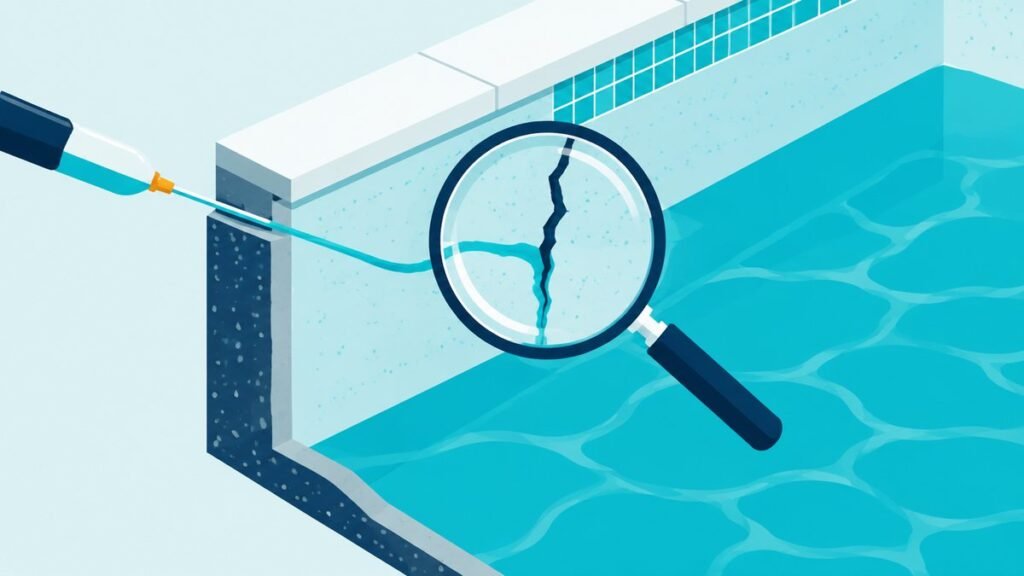
When you suspect a particular spot, such as a crack, a fitting or a skimmer throat, a dye test can confirm it. With the pump off and the water calm, release a small amount of dye or food coloring near the suspected area, using a dropper. If the dye is pulled toward the crack or gap, water is escaping there. Wear goggles if you are in the water, avoid disturbing the water and do not use a dye that could stain a liner. Test only a few spots at a time.
Clues that point to a leak
- The level keeps dropping after you account for evaporation, rain and splashing.
- You add water often to keep the level up.
- Soggy ground, new puddles or sunken patches near the pool or equipment pad.
- The pump loses prime or draws air.
- Cracks in a pool deck, which also relate to pool deck crack repair.
- Higher water bills.
When to call a leak detection professional
Professionals use tools that locate leaks without guessing, such as pressure testing of lines, electronic listening equipment and dye or camera inspection. Call one when the bucket test shows a leak but your checks of fittings and equipment find nothing, when you suspect underground plumbing or when the loss is large. Ask what methods they use, whether they put the findings in writing and what a repair would involve, so that you can compare a repair estimate before work begins.
How to reduce water loss in the meantime
- Use a cover when the pool is not in use to cut evaporation.
- Keep the water at the normal level, not overfilled, since a high level can spill or reach a leak point.
- Check baskets and the pump regularly, and fix visible leaks at unions and hoses right away.
- Record the water level or the autofill time each day, since a log shows how fast the loss really is.
Frequently asked questions
How much water loss is normal for a pool?
It varies with weather, sun, wind, temperature and swimming. The bucket test is more reliable than a fixed figure because it compares your pool with evaporation under the same conditions.
Can I do swimming pool leak detection myself?
You can do the bucket test, check fittings and equipment and try a dye test. Locating hidden leaks in underground pipes usually needs a professional.
Should I keep adding water if I suspect a leak?
You may need to keep the pool usable, but note how much you add. Constant refilling can hide a growing leak and affect your water chemistry.
Will the pool leak get worse if I wait?
Often yes, because water can erode soil around the pool and damage the structure. Once you confirm a leak, plan the repair.
Sources
The references below are good places to confirm the details on this topic.