A pool filter cartridge is the pleated polyester element inside a cartridge filter that traps dirt, leaves, oils and fine debris as water passes through it. It does its job well until the pleats clog, and then the pressure rises, the flow falls and the water cloudies. Cleaning a pool filter cartridge on time keeps the pump from straining, and replacing it at the right point saves you from fighting water problems that a worn cartridge cannot fix. This guide explains how a cartridge filter works, when to clean the cartridge, how to clean it properly, when it is time to replace it and the mistakes that shorten its life.
How a pool filter cartridge works
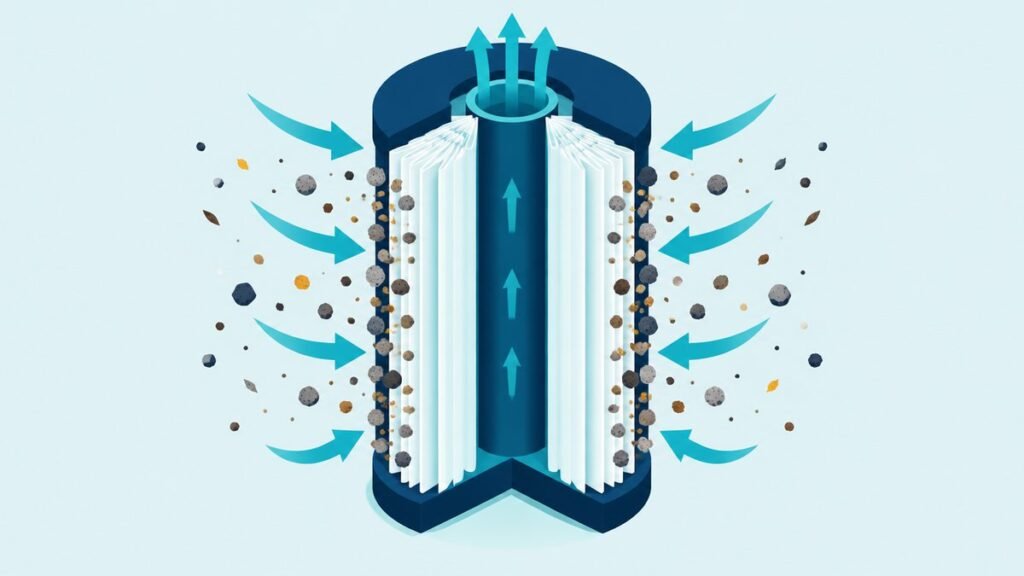
Water enters the filter tank under pressure and flows through the pleated fabric from the outside in. Debris stays on the surface of the pleats, and clean water collects in the core tube and returns to the pool. The pleats give the cartridge a large surface area in a small tank. Unlike a sand filter, a cartridge filter has no backwash valve, so you clean it by removing it and rinsing it by hand. Our guide to the pool sand filter shows the contrast.
When to clean the cartridge
Use the pressure gauge. Pentair’s cleaning guide for its Clean & Clear Plus filter says to clean the filter when the gauge reads about 10 psi higher than the original starting pressure, or when you notice a significant drop in flow. It also notes that on a variable speed pump the starting pressure depends on the pump speed when you record it, so note the speed along with the number. Write the clean-filter pressure on a piece of tape near the gauge so you can compare later, and check it again after each cleaning, because a cartridge that no longer returns to the original number is telling you something.
| Sign | What it usually means |
|---|---|
| Pressure about 10 psi above the clean starting pressure | Time to clean, according to Pentair’s guide |
| Weaker flow from returns | Clogged cartridge, full baskets or a closed valve |
| Cloudy water despite good chemistry | Dirty or worn cartridge |
| Pressure still high after cleaning | Oils, scale or a cartridge near the end of its life |
| Pressure very low | Torn cartridge, bypassed water or a suction-side problem |
How to clean a pool filter cartridge, step by step
These steps follow the general approach in Pentair’s guide. Your own manual comes first, because lid clamps, manifolds and cartridges differ.
- Turn off the pump and any timer, and switch off power at the breaker.
- Relieve the pressure. Open the manual air relief valve and wait until the gauge reads zero.
- Drain the tank through the drain plug.
- Open the filter by loosening the clamp. Pentair says not to lift the lid by the air relief valve, and to wiggle a stuck lid side to side rather than pry it with a screwdriver, which can damage the O-ring.
- Clean the pump strainer basket while the system is open.
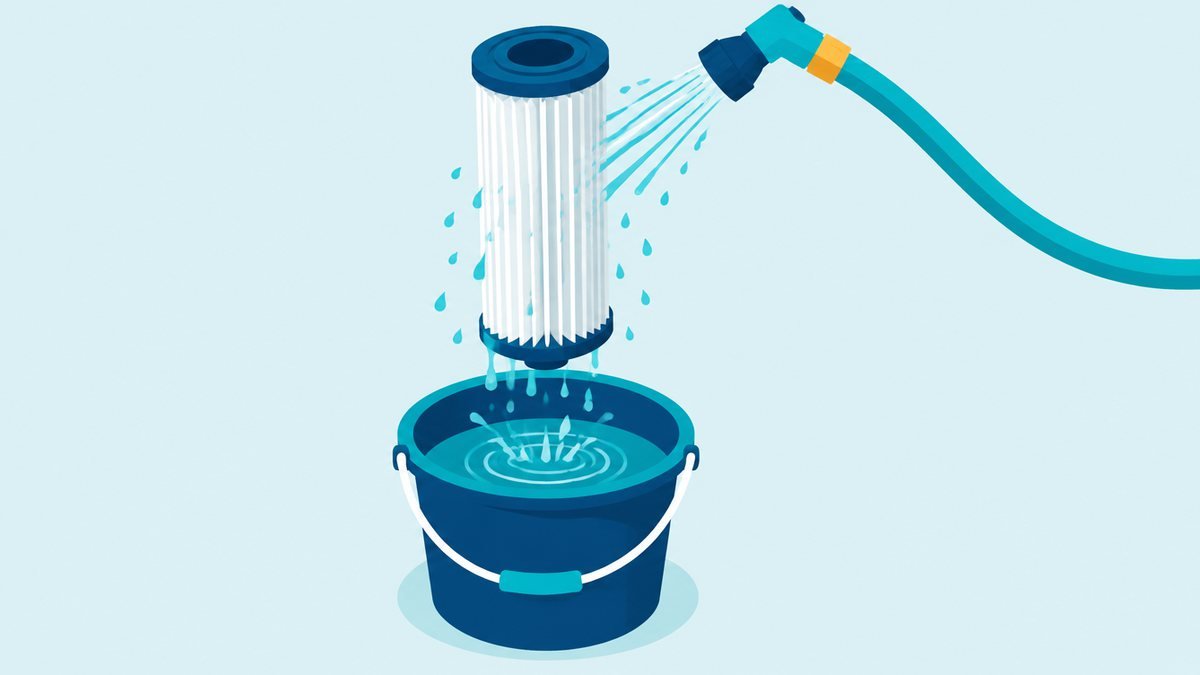
- Remove each cartridge and rinse it with a garden hose and a straight-stream nozzle, held at about a 45 degree angle and working from top to bottom, with special attention between the pleats.
- Clean the inside of the tank and the bottom manifold, and check that the gasket is seated evenly.
- Reassemble with a clean O-ring, close the clamp as the manual describes, and follow the start-up steps exactly, keeping the air relief valve open until water comes out.
Deep cleaning for oils and scale
A hose removes loose debris but not body oils, sunscreen or mineral scale. Pentair’s guide gives two levels of deeper cleaning.
- Oils and lotions. Soak the cartridge for at least an hour in a commercial filter cleaner, or in a solution of 1 cup of trisodium phosphate or dishwasher detergent per 5 gallons of water, then rinse thoroughly. Follow the instructions if your pool uses a polyhexamethylene biguanide sanitizer.
- Mineral buildup. After oils are removed, an acid soak of one part muriatic acid to twenty parts water for about ten minutes on each half, or until bubbling stops, can dissolve scale, algae and calcium. Rinse well afterward.
Pentair warns that failing to remove all oils and cleaning solution before an acid soak permanently restricts flow and leads to early cartridge failure. Our guide to the pool filter cleaner compares products, and the hot tub filter cleaner article covers spa cartridges, which are usually cleaned more often.
When to replace the cartridge
- The pleats are flattened, cracked or torn, or the fabric is frayed.
- The end caps or core are broken.
- Pressure rises again within days of a thorough cleaning.
- The water stays cloudy even though chemistry is balanced and the pump runs long enough.
- The cartridge has been cleaned many times and no longer returns to the original pressure.
Cartridge life varies with the pool, the bather load and how well you clean the element, so there is no fixed lifespan that fits everyone. Replace cartridges in a set where the manufacturer advises, and use the exact model listed in your manual. If the whole filter is old or damaged, see pool filter replacement.
Mistakes that shorten a cartridge’s life
- Using a pressure washer. It can drive debris into the pleats and tear the fabric. Use a garden hose with a straight nozzle, as the manufacturer describes.
- Skipping the oil step before an acid soak. This is the mistake Pentair warns about.
- Letting the pressure climb well above the starting number. A badly clogged cartridge is harder to restore.
- Running the pump with torn pleats or a loose lid. Debris bypasses the filter, and trapped air is dangerous.
- Storing it wet and dirty. Let a cleaned cartridge dry before storage and keep it out of direct sun.
Frequently asked questions
How often should I clean my pool filter cartridge?
Clean it when the pressure reaches about 10 psi above the clean starting pressure, or when flow drops. In a busy season that may be every few weeks.
Can I use a pressure washer on a cartridge?
It is not recommended. A garden hose with a straight-flow nozzle held at an angle cleans the pleats without damaging them.
Should I soak my cartridge in acid every time?
No. Acid is for mineral scale after oils are removed, and it is hazardous. Hosing and, if needed, a cleaner soak are enough most of the time.
How do I know if the cartridge is worn out?
If pressure rises again quickly after cleaning, or the fabric is flattened, torn or frayed, replace it.
Sources
Model details differ, so follow the instructions that came with your equipment. These are the sources behind this guide.