
Plug-and-play hot tubs run on a standard household outlet instead of a dedicated 240-volt circuit, which makes them cheaper and quicker to install, but usually less powerful. The trade-off is that they often can’t run the heater and the jets at full strength at the same time. This guide explains how they work, how they compare with hardwired tubs, what electrical supply they need and the questions to ask before you buy.
What are plug-and-play hot tubs?
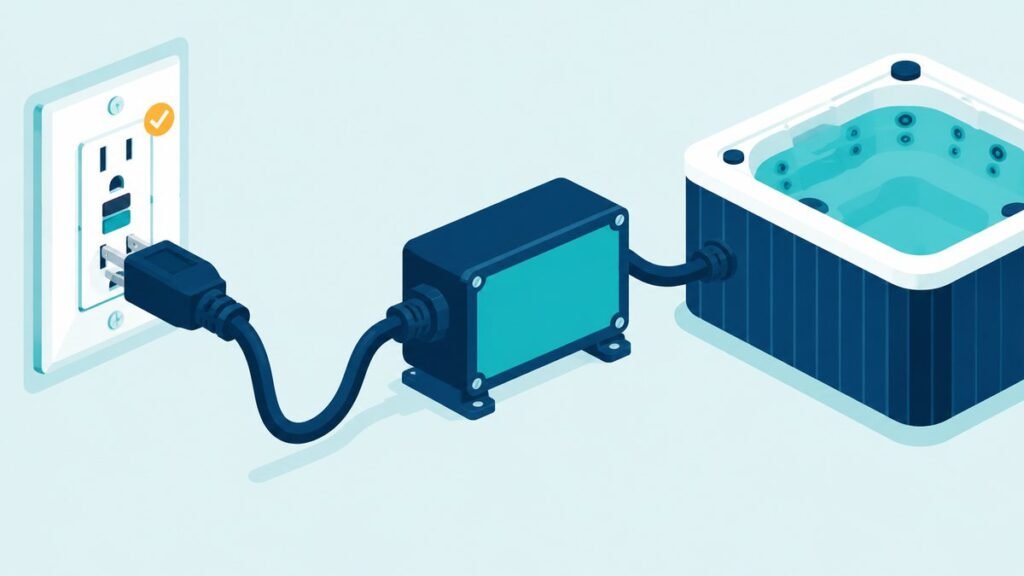
A plug-and-play hot tub, also called a 110 or 120-volt tub, plugs into a standard outdoor outlet. Hot Spring describes them as running on a standard 110 or 115-volt household outlet, so they don’t need a dedicated 240-volt GFCI breaker or hardwired installation. They are portable, need little backyard preparation and can go on a patio, deck or pavers if the surface is flat and strong enough. Jacuzzi describes plug-and-play 120-volt models as an easier entry point, with different performance characteristics from 240-volt tubs.
Plug-and-play vs hardwired hot tubs
| Plug-and-play (120 V) | Hardwired (240 V) | |
|---|---|---|
| Power supply | Standard outdoor outlet | Dedicated 240-volt circuit installed by a licensed electrician |
| Installation | Simple, with minimal electrical work | More involved, with wiring and a disconnect |
| Heating | Slower, and the heater may pause when the jets run | Faster, with the jets and heater available together |
| Jets and features | Usually fewer or lower power | More power and more options |
| Portability | Easy to move | Needs an electrician to disconnect |
Jacuzzi says most full-size hot tubs require a dedicated 240-volt circuit with a 50-amp GFCI breaker, professionally installed by a licensed electrician.
Electrical requirements for a plug-and-play tub
Requirements differ by brand and model, so read the manual and ask a licensed electrician. Common points from manufacturers include:
- A dedicated circuit is recommended, so other loads don’t share it. Jacuzzi says it is recommended even though sharing can work if there are no other large loads. Cal Spas says its 120-volt spa GFCI should be on an independent circuit.
- GFCI protection is required. It may be built into the cord or provided by a GFCI outlet.
- Use an outdoor, weatherproof outlet cover rated for use while plugged in.
- Don’t modify or extend the cord. Jacuzzi warns against splicing or extending these cords with household extension cords.
- Distance rules for the GFCI and outlet vary with the manufacturer and local code, so confirm them with your electrician and inspector.
What you give up with a 120-volt tub
Because the supply is limited, many plug-and-play tubs heat slowly and may turn the heater off when the jets are on high. In cold weather this can make a difference to how warm the water stays. A good cover and a sheltered spot help. See our guide to hot tub covers. Many owners find a plug-and-play tub perfectly good for relaxing in mild climates.
Questions to ask before you buy
- What outlet and circuit does this model need, and do I already have one?
- Does it have built-in GFCI protection in the cord?
- Can it heat and run the jets together, or does it pause the heater?
- How long does it take to heat from cold in my climate?
- What does it cost to run in winter?
- Can I move it later, and what does the warranty cover?
Costs, siting and running costs
Prices and running costs vary by model and location, so compare quotes and manufacturer figures. Site the tub on a level, solid surface close to the outlet, with space to open the cover and reach the equipment. Plan for the tub’s filled weight on a deck. Our guide on how much a hot tub costs to buy and run explains the costs.
If a plug-and-play tub trips the GFCI
A tripped GFCI is a safety device doing its job. Unplug the tub, let it dry, press the reset and watch if it trips again. If it does, don’t keep resetting it. Have a technician check the tub and the circuit. See hot tub repair for common faults.
Is a plug-and-play tub right for you?
Plug-and-play suits people with a sheltered spot, a good outdoor outlet already in place and moderate expectations. It is a good fit if you want to try a hot tub without a big installation project, if you rent or may move or if your budget is tight. It is a poorer fit if you live in a very cold area, want strong jets and fast heating or plan to use the tub heavily all winter. Think about how you will actually use it before you choose.
Heating and running costs in practice
A 120-volt supply limits the power available, so many tubs heat in stages or pause the heater when the jets are on high. Heat loss in cold, windy weather can exceed what the heater can replace. A tight cover, a wind break and a sheltered location make a big difference. Running costs depend on your electricity price, your climate and the tub’s insulation, so ask the dealer for an honest estimate for your area and compare with a hardwired model.
Siting and installation checklist
- A level, solid base that can carry the tub when full of water and people.
- An outdoor GFCI outlet within reach of the cord, installed to code, with a weatherproof in-use cover.
- Space around the tub to open the cover and reach the access panel.
- Good drainage so water doesn’t pool under the tub.
- A route for delivery, including gates and steps.
- Clear distance from overhead power lines.
Maintenance is the same
A plug-and-play tub needs the same care as any other: clean filters, balanced water and a good cover. Our guides to hot tub covers and hot tub repair cover the two things that matter most. The CDC recommends a pH of 7.0 to 7.8 and at least 3 ppm of chlorine in hot tubs, and testing the water at least twice a day when it is in heavy use.
For an off-grid alternative, read our guide to the wood-fired hot tub.
Frequently asked questions
Can a plug-and-play hot tub plug into any outlet?
No. It needs the right outlet and circuit and GFCI protection as the manufacturer specifies, ideally a dedicated outdoor outlet.
Are plug-and-play hot tubs worth it?
They suit buyers who want a lower setup cost and portability. They usually heat more slowly and have less power than hardwired tubs.
Can I use an extension cord?
No. Manufacturers warn against extending or modifying the cord.
Do I need an electrician for a plug-and-play tub?
You may if you don’t already have a suitable outdoor GFCI outlet in the right place. A licensed electrician should install new outlets and circuits.
Sources
For more detail on this topic, start with these references.