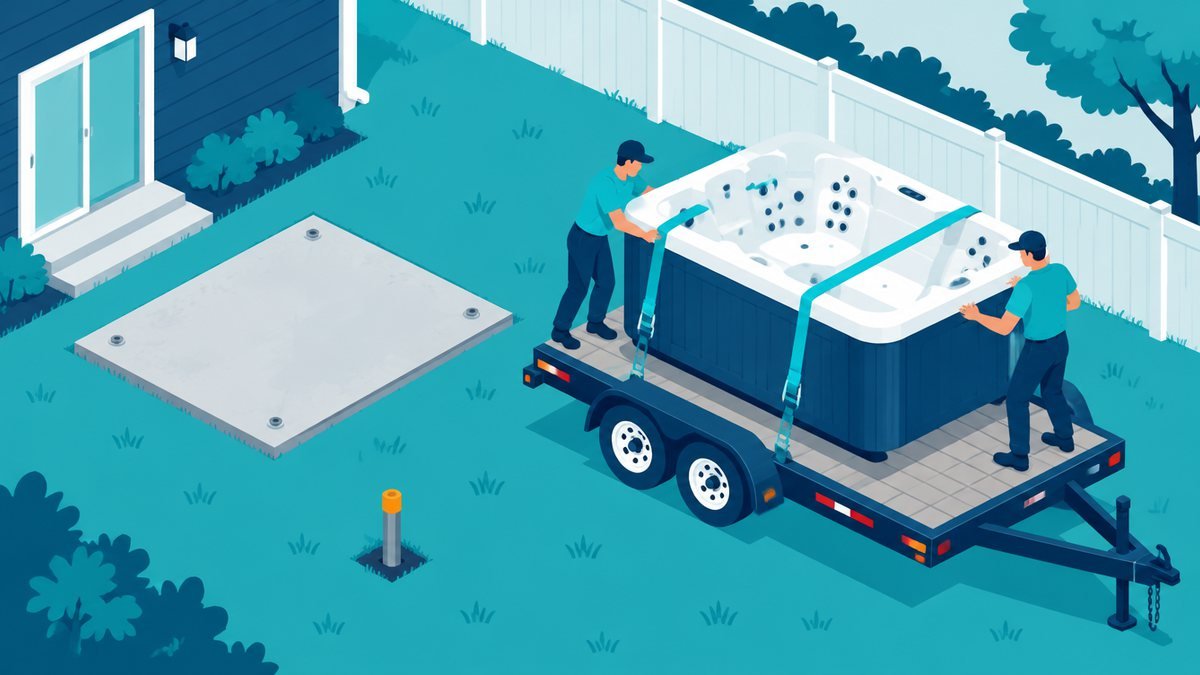
Hot tub removal comes down to four jobs: shutting off and disconnecting the electricity, draining the water, moving the tub and getting rid of the pieces. The cost depends on the tub, how easy it is to reach, whether it is hardwired and what your area charges, so get quotes rather than trust a general number. This guide explains your options, how to prepare, what you can safely do yourself and what to leave to a licensed electrician.
First, decide what you want to do with the tub
| Option | Best when | Things to know |
|---|---|---|
| Sell or give it away | The tub works and the shell is sound | The buyer usually has to move it, and a licensed electrician should disconnect it |
| Hire a removal or hauling company | You want it gone with little effort | Ask whether the price includes the electrical disconnection and disposal |
| Dismantle it yourself | You are comfortable with tools and have help | Shells are heavy and awkward, and the power must be off and verified first |
| Recycle parts | The tub is too old or damaged to sell | Pumps, heaters and wiring may go to scrap or metal recycling, but check what local facilities accept |
What affects the cost of hot tub removal
Companies quote differently, but the same factors drive the price almost everywhere:
- The size and weight of the tub, and whether it is a plug-and-play model or hardwired.
- Access: gates, stairs, decks, tight turns or a rooftop deck make the job harder.
- Whether it is built into a deck or enclosure that must be taken apart first.
- The electrical disconnection, which a licensed electrician normally does.
- Disposal or recycling fees at your local facility.
Get at least two written quotes that state what is included.
How to prepare for hot tub removal
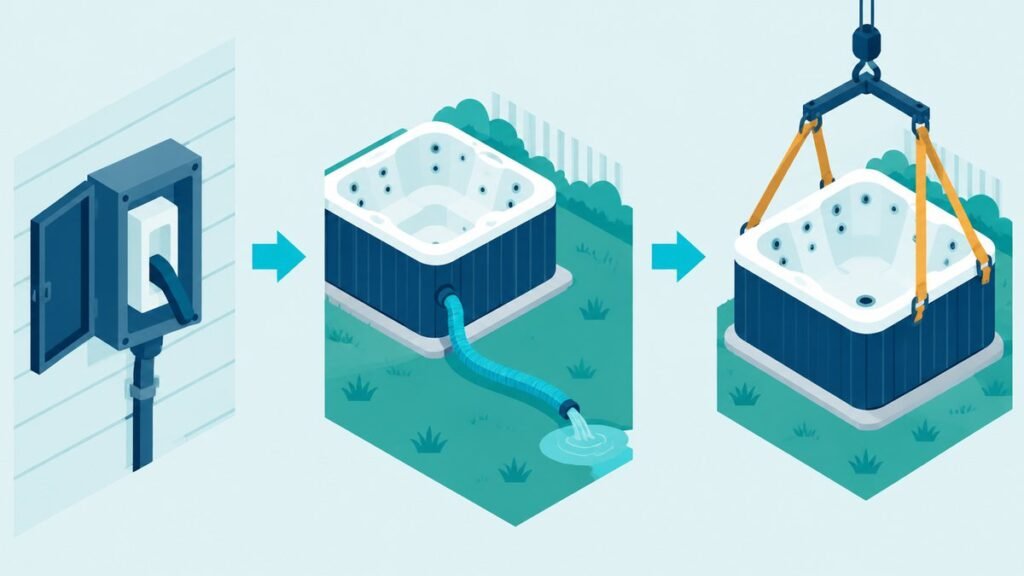
1. Turn off and disconnect the power
A hardwired tub is usually on a dedicated 240-volt circuit with GFCI protection. Jacuzzi says full-size tubs normally need a dedicated 240-volt circuit with a 50-amp GFCI breaker installed by a licensed electrician, and the same reasoning applies to taking one out. The Electrical Safety Foundation International advises having an electrician inspect and upgrade pool, spa or hot tub electrical work to applicable local codes. Have an electrician disconnect a hardwired tub, and cap the wires safely. A plug-and-play tub only needs unplugging, but still switch it off first.
2. Drain the water
Use a submersible pump and hose, and check where the water may go before you start. Water treated with chlorine or bromine shouldn’t go to a storm drain, which leads to waterways untreated. Ask your city or water utility what is allowed.
3. Remove the cover and clear the area
Take off the cover and store or dispose of it separately. Remove loose items, chemicals and any steps or decking that block access.
4. Disconnect the plumbing and drain the equipment
Open drains and let the pump and heater empty so nothing leaks while the tub is tilted or moved.
Moving and disposing of the tub
A full-size tub is heavy and usually takes several people or a lifting rig. Shells and cabinets often aren’t accepted in household recycling, so ask a transfer station, scrap yard or specialist recycler what they take, and call ahead. Pumps, heaters and copper wiring often have scrap value. Don’t dump a tub on land that isn’t yours, and check whether your area requires a disposal permit.
What happens to the site afterwards
Once the tub is gone, you may be left with an electrical connection, a concrete pad or a drain. Cap and label any leftover wiring, and have an electrician make it safe. Ask whether you need a permit to remove the circuit if you plan to renovate the area. If you plan to replace the tub, read our guide on plug-and-play hot tubs and how much a hot tub costs to buy and run.
Alternatives to removal
If the tub is only tired, repair may be cheaper than removal. See hot tub repair for common faults. If it is not going to be used for a while, winterizing it protects it until you decide.
Questions to ask a removal company
- Does the quote include disconnecting the power, or do I need an electrician?
- Is draining included, and where will the water go?
- Do you remove decking or enclosures, or is that extra?
- How do you dispose of or recycle the tub?
- Are you licensed and insured, and can I see proof?
- What happens if the tub can’t be moved in one piece?
Preparing the route
Before the crew arrives, walk the route from the tub to the street. Remove plants, furniture, gates and anything else in the way, measure doorways and gates against the tub’s dimensions and look for steps, slopes and overhead wires. Protect lawns and paving, and tell neighbors if the work will block a driveway. A clear path saves time and reduces the risk of damage or injury.
Selling or giving the tub away
A working tub can be worth something to someone who wants a second-hand one. Be honest about its age, condition and any faults. Check that the pump, heater and controls run, and drain and clean it before showing it. Agree who disconnects the electricity and who moves the tub, and put the terms in writing. Remember that an electrician, not the buyer, should disconnect a hardwired circuit.
What to do with the old pad and wiring
A concrete pad or deck frame can be reused for a new tub, a patio or a shed. If you are removing the pad, check for buried conduit, and ask your electrician to cap and label the circuit. Seal any exposed junction boxes and make sure nothing live is left in a place where someone could dig or touch it.
Frequently asked questions
How do I get rid of an old hot tub?
Sell or give it away if it works, hire a hauler or removal company, or have it taken apart and recycled where facilities accept the pieces.
Can I remove a hot tub myself?
You can if you have help and the power is disconnected by a licensed electrician when it is hardwired. The tub is heavy and awkward, so be realistic about the equipment and people you need.
Do I need an electrician to remove a hot tub?
For a hardwired tub, yes. Cap the circuit properly and leave it safe. For a plug-and-play model, unplugging it is usually enough.
Where can I drain hot tub water?
Check local rules. Water treated with chlorine or bromine shouldn’t go to a storm drain, so ask your water utility.
Sources
These pages are worth reading in full if you want the details behind this guide.